Low-Cost, High-Performance Humanoid Upper Body for Automating Hazardous Tasks With Quasi-Direct Drive Actuators and Machine Learning
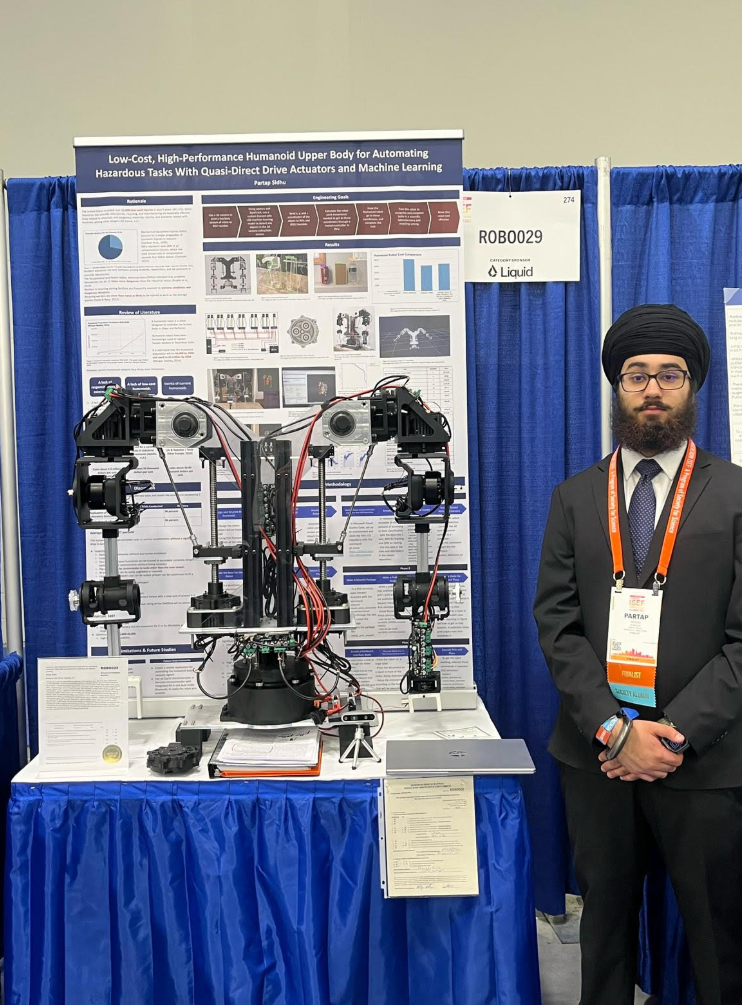
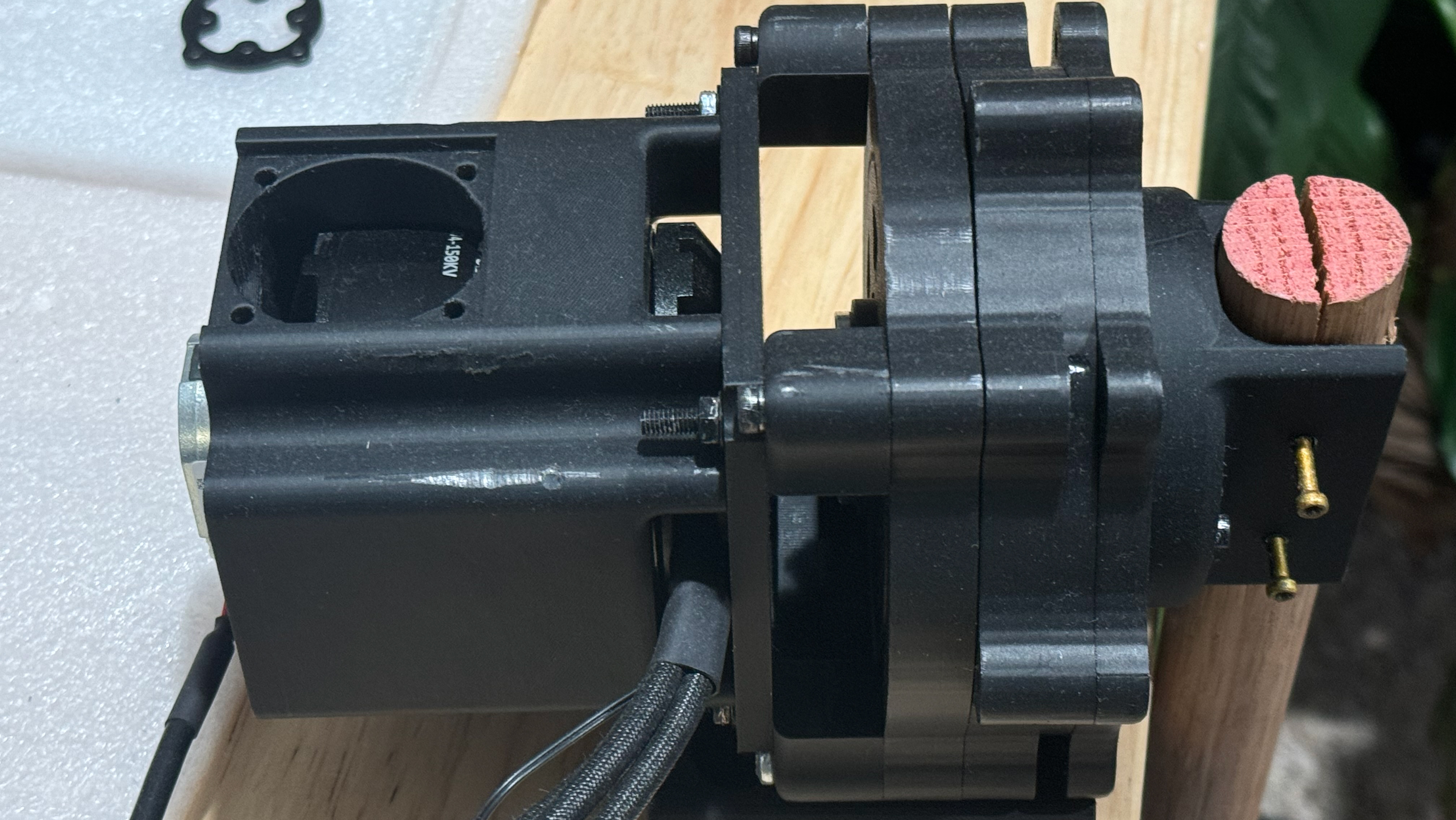
Over the past 5 years, the United States recorded over 25,000 fatal work injuries (AFL-CIO, 2023). Industries like scientific laboratories, recycling and manufacturing facilities are especially affected. Workers in these industries are often exposed to hazardous chemicals and procedures, which can have serious health effects (Santos, Silva, & Lima, 2020). Workplace injuries make up 80% percent of all compensation injuries, totaling over 100 billion annually (Bureau of Labor Statistics, 2023). Humanoid robots have been used increasingly to replace human workers in dangerous tasks like these. However, current humanoids face three main limitations: the high cost of current humanoids, a lack of adaptability to dynamic external forces, and high inertia, which impacts real-time performance (Lippiello, Siciliano, & Siciliano, 2023). The purpose of this research was to create a low-cost, high-performance humanoid upper body for replacing human workers in hazardous tasks using quasi-direct drive actuators and machine learning. With the meta-operating system ROS2, the humanoid includes real-time trajectory planning, accurate position detection with an Intel Realsense 3d camera, and motor control with a CAN-bus interface. Using a custom-trained Yolov10 machine learning model to detect objects, the total system achieved an average accuracy of 97 percent while successfully completing two tasks in laboratory and recycling environments. Compared to existing humanoids, this humanoid robot is significantly more cost efficient and can be trained to complete tasks other than the ones tested in this study. Ultimately, with a low-cost humanoid upper body, this innovation aims to improve lives and reduce workplace injuries, providing an alternative to human labor in hazardous environments.